AI-Enhanced Assessment CRUD
Designing a Scalable, Human-in-the-Loop System for AI-Generated Assessments
UX CASE STUDY
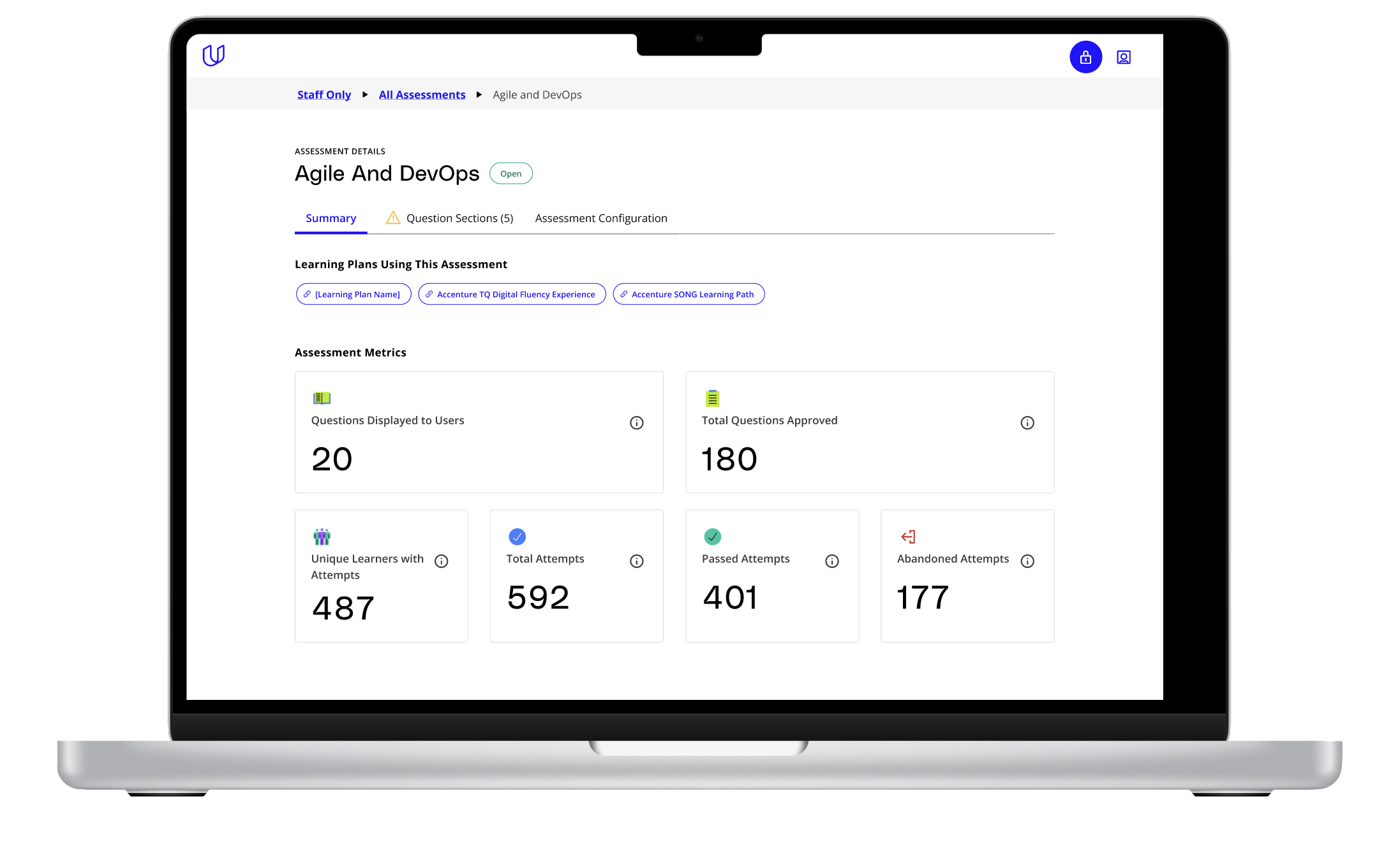
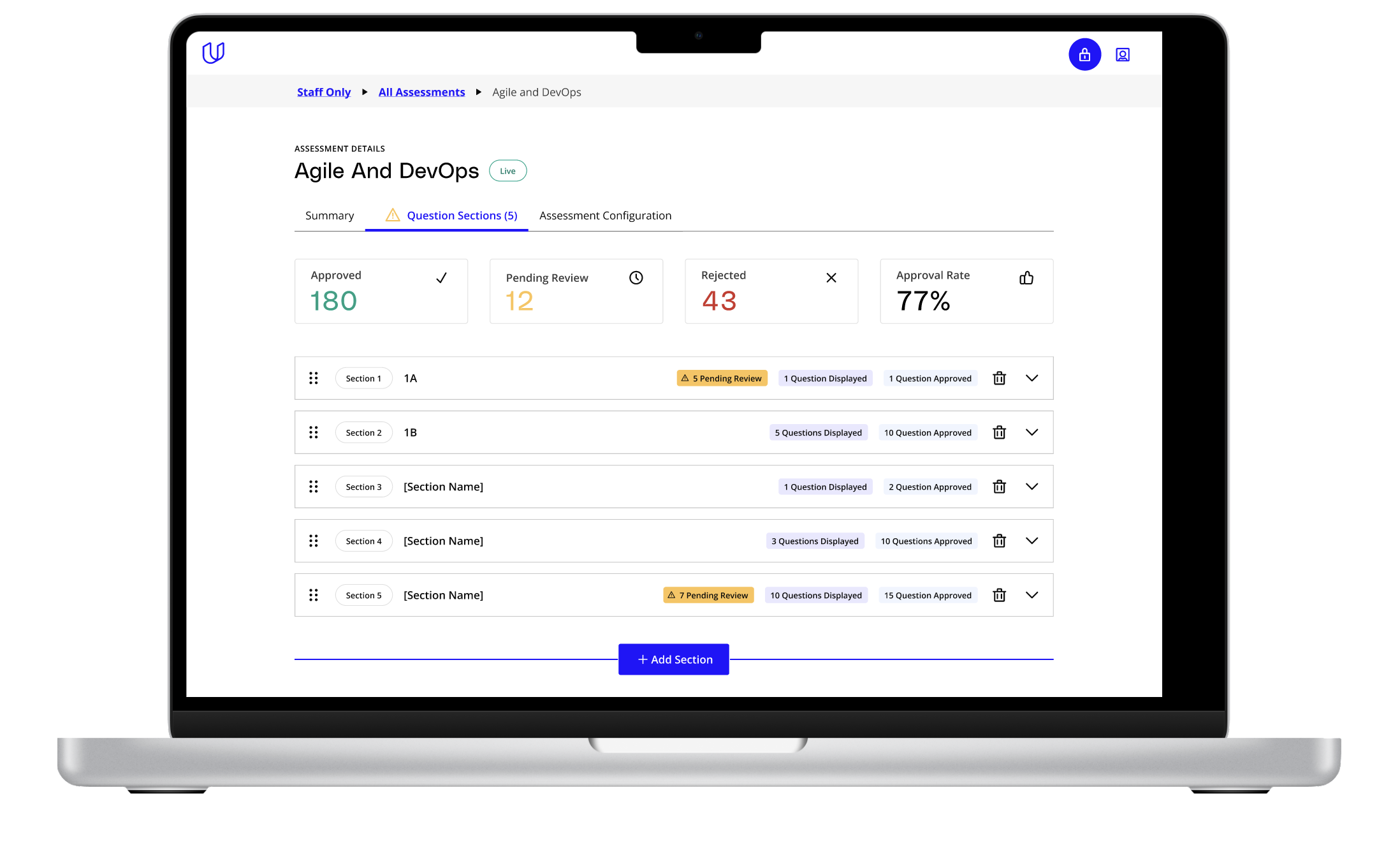
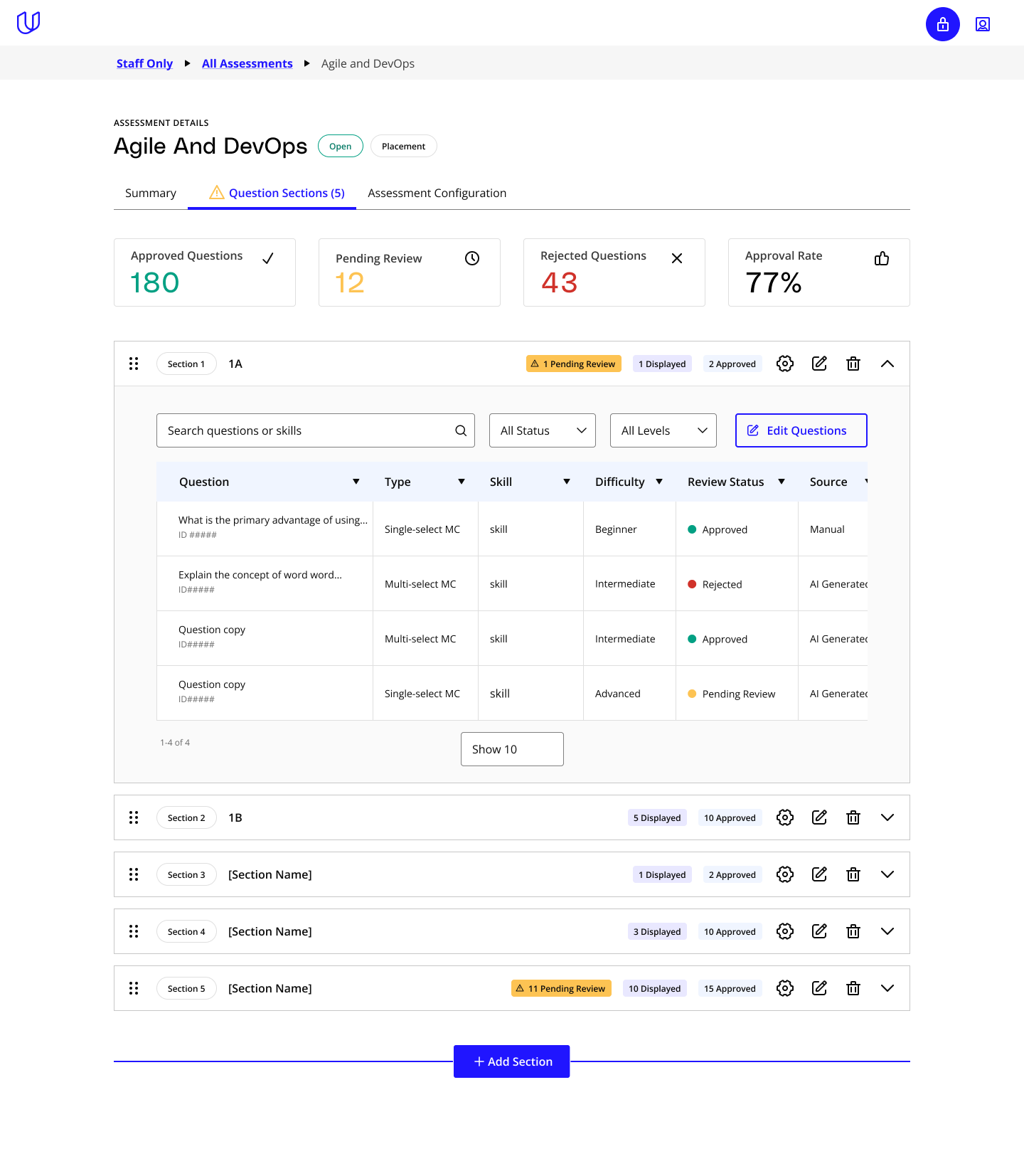
BEFORE
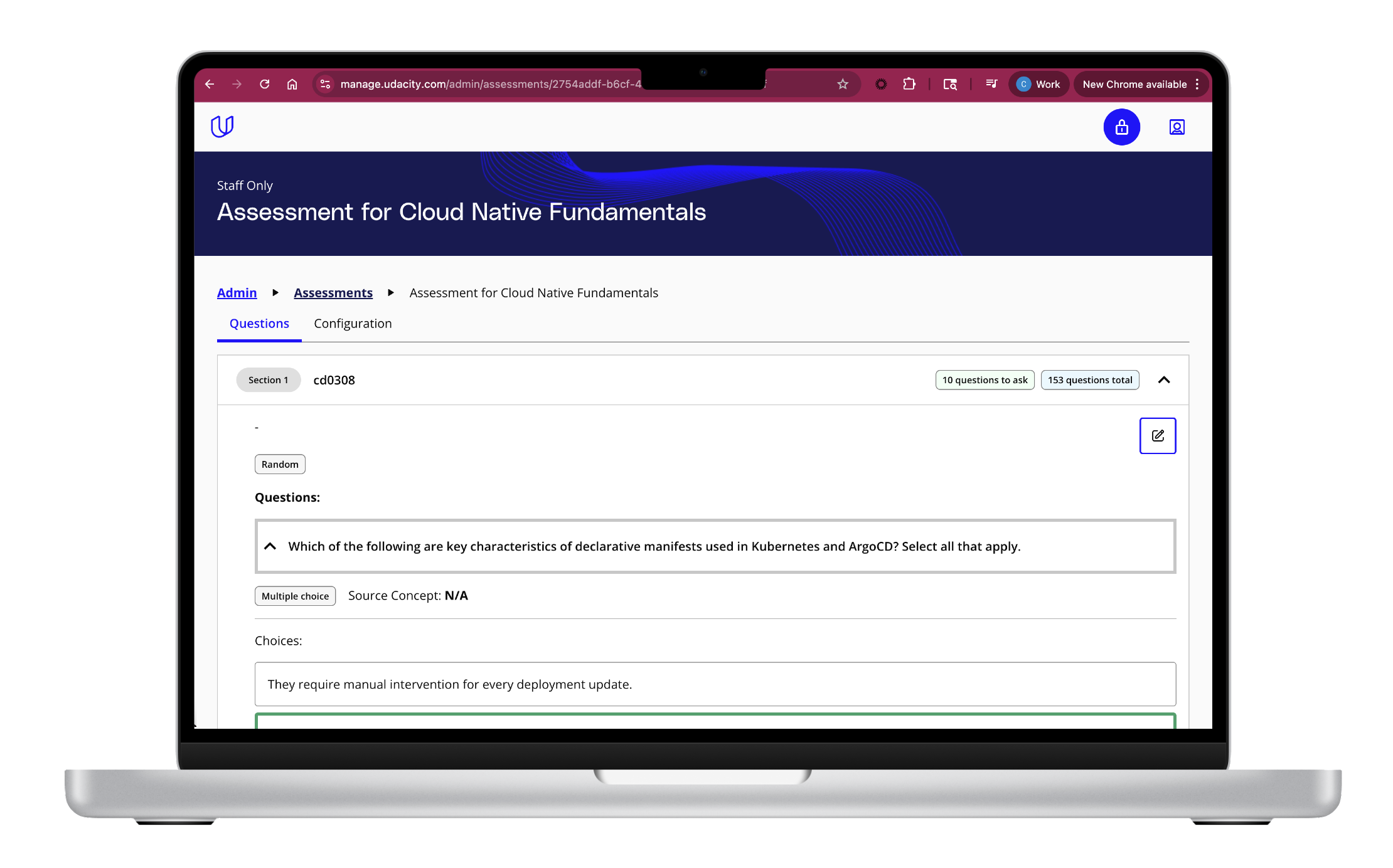
AFTER
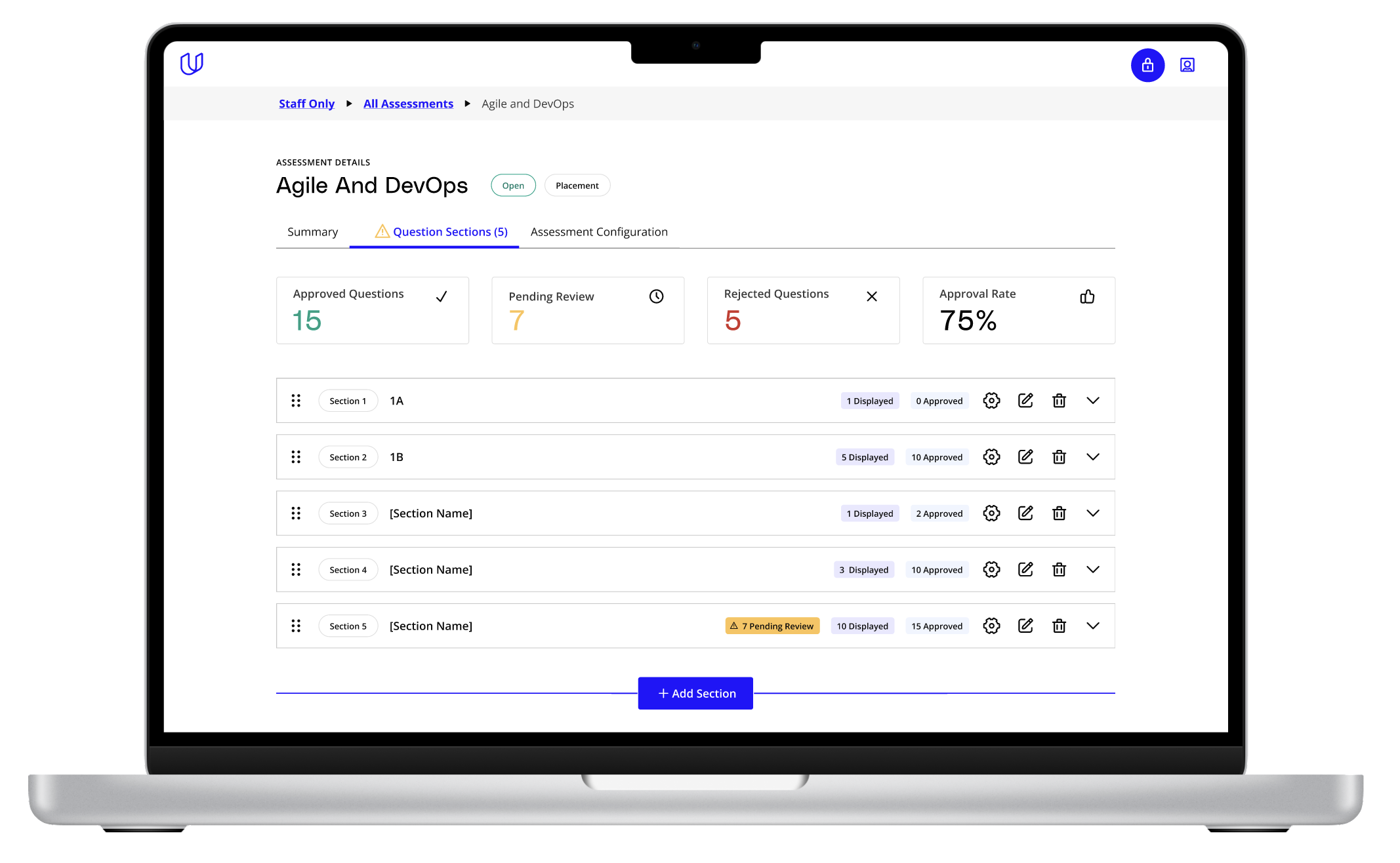
Overview
Udacity’s enterprise business relied heavily on third-party assessments and manual, engineering-driven workflows to create and manage in-house assessments. As demand increased—and AI-generated content became viable—these processes failed to scale.
I led the design of an AI-enhanced assessment creation and management system within Udacity’s enterprise management platform, enabling internal teams to quickly create, review, edit, and maintain assessments—using both manual and AI-generated questions—under significant time and technical constraints.
Team
1 Product Manager, 2 Engineers, 1 Product Designer (Me)
Time
30 days
Tools
Figma, ChatGPT, Lovable, Gemini, Jira, confluence, G suite
All collaboration was conducted remotely.
Audience
Udacity Staff
Platform
Web
Key Stakeholders
Sales Solution Architects, Customer Success Operations, Customer Success Managers, Content
Why This Matters
As organizations shift toward skills-based hiring and upskilling, assessments become critical infrastructure—not just content. Yet most learning platforms struggle to scale assessment creation due to heavy engineering dependency, slow workflows, and limited quality control.
This project addressed a foundational problem: how to safely and efficiently scale assessment creation using AI without sacrificing quality, trust, or operational control.
By designing a flexible assessment CRUD system with built-in human review, this work:
Reduced reliance on engineering for day-to-day assessment creation
Enabled non-technical teams to operate independently at scale
Established a durable foundation for AI-generated assessments across multiple future use cases
Directly supported enterprise contracts and revenue timelines
At scale, this system shifts assessment creation from a bottleneck into a strategic capability, enabling Udacity to move faster as AI-driven content generation becomes table stakes.

The ChallengeSeveral systemic issues limited Udacity’s ability to scale assessments:
1. Engineering Dependency
Assessments and questions were manually created or configured by engineers, creating bottlenecks and slowing response to customer needs.
2. Non-Scalable Workflows
Non-technical teams (Customer Success, Content, Ops) lacked tools to independently create or manage assessments, resulting in operational delays.
3. No Quality Control Framework
There was no consistent way to evaluate question quality or performance, limiting confidence in assessment accuracy and fairness.
4. AI Without Governance
As the team explored AI-generated questions, there was no structured human-review process to ensure pedagogical quality, relevance, or trustworthiness.
At the same time, contractual commitments required delivering a functional solution in weeks, not months.
Design ObjectiveDesign a scalable assessment creation system that:
Enables full CRUD functionality for assessments and questions
Supports both manual and AI-generated content
Empowers non-technical staff to operate independently
Introduces human-in-the-loop review for AI-generated questions
Can be delivered quickly within legacy platform constraints
My Role
Lead Product Designer (IC Lead)
I owned the end-to-end UX strategy and execution for this initiative.
Responsibilities
Experience definition under tight constraints
Workflow and systems design
AI-assisted ideation and prototyping
UX/UI design within an existing enterprise platform
Cross-functional alignment and handoff
Constraints & Scope
This project was intentionally execution-heavy and time-boxed.
Timeline
~30 days end-to-end
Key Constraints
Existing legacy assessment experience partially built
New AI APIs and databases under active development
Minimal time for foundational refactors
Q3–Q4 enterprise contracts dependent on delivery
Scope Expansion
Originally focused on AI-driven question creation, early discovery revealed the core assessment experience was incomplete. To support AI responsibly, we expanded scope to design foundational assessment CRUD—ensuring both manual and AI-generated workflows could scale.
This decision traded visual polish for long-term system viability.
Approach
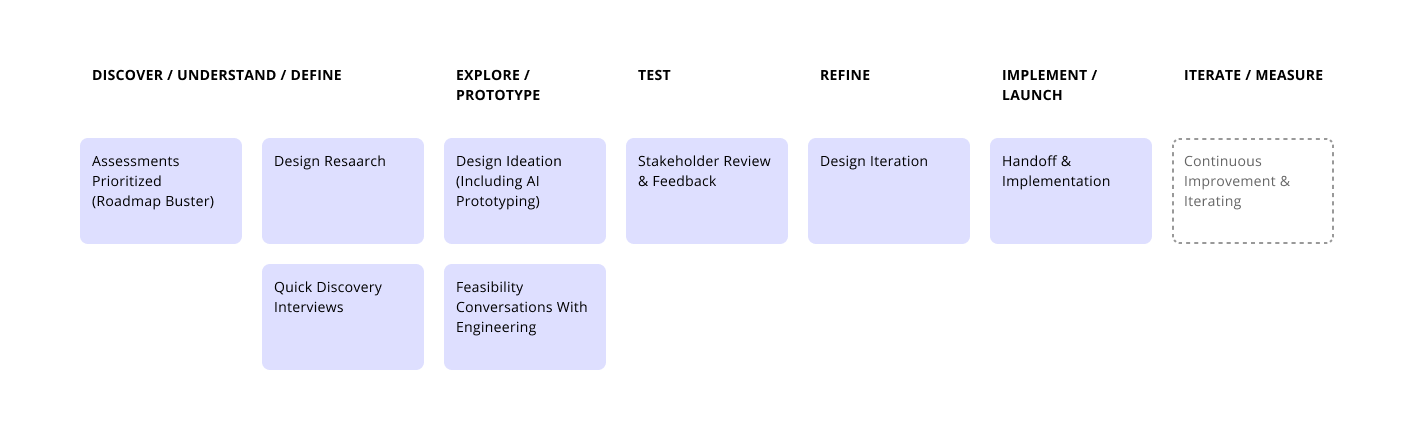
1. Rapid System Understanding
Audited the existing assessment experience and internal workflows
Reviewed an engineering-built Python prototype for AI-generated questions
Partnered with engineers to understand backend constraints and data models
2. Experience Principles
Non-technical users should operate independently
AI should accelerate creation, not bypass human judgment
CRUD workflows must support iteration, not just creation
The system must be extensible to future assessment types
3. AI-Enhanced Ideation
I used AI tools to:
Rapidly explore workflow variations
Generate UI and copy concepts
Stress-test edge cases in AI-generated content review
This allowed faster convergence while maintaining design rigor.
The Solution
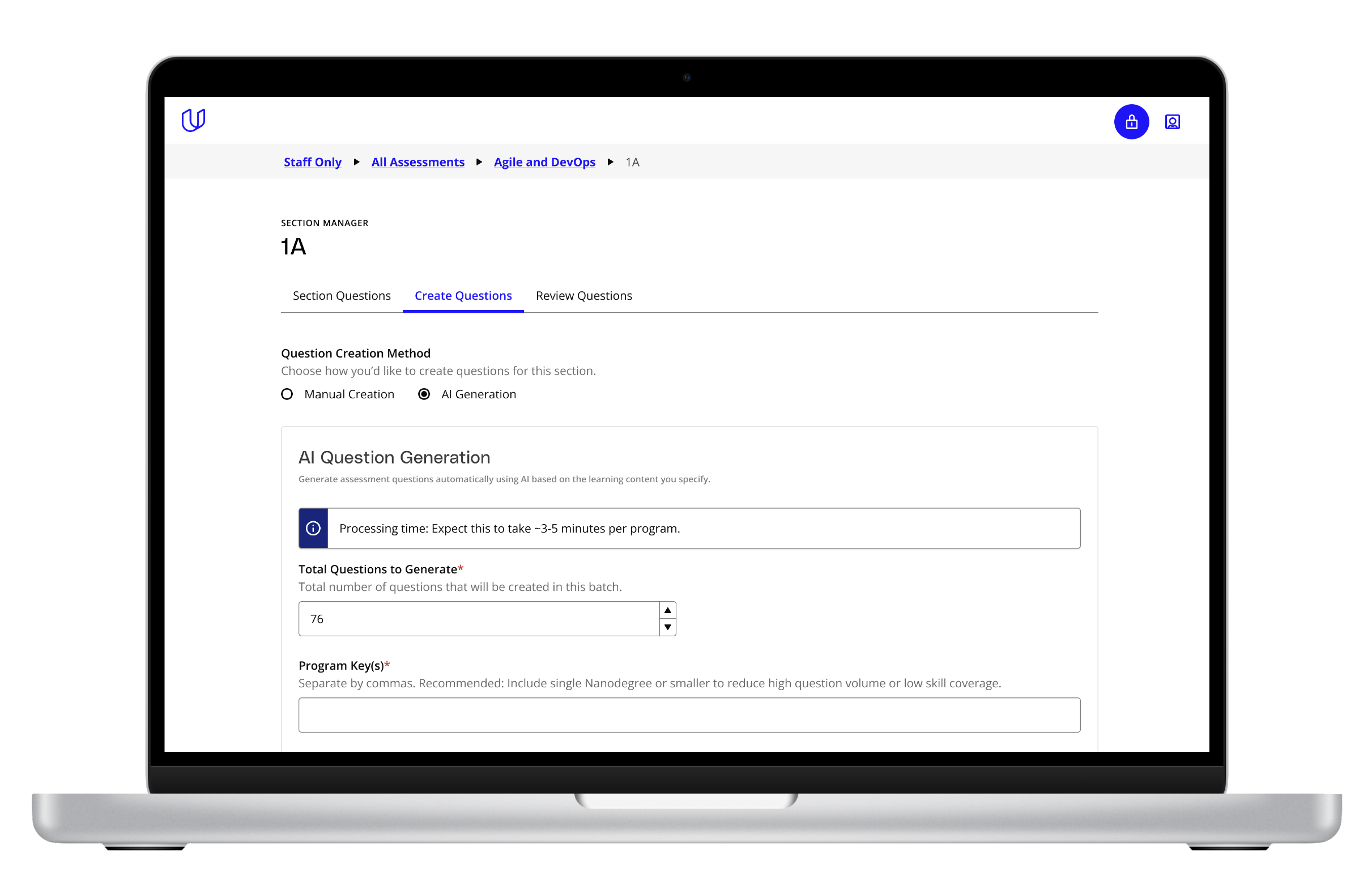
I designed a flexible assessment management system embedded within Udacity’s enterprise platform.
Core Capabilities
Assessment CRUD
Create, edit, publish, and manage assessments without engineering support
Question Management
Add, edit, replace, and remove questions
Support both manual and AI-generated content
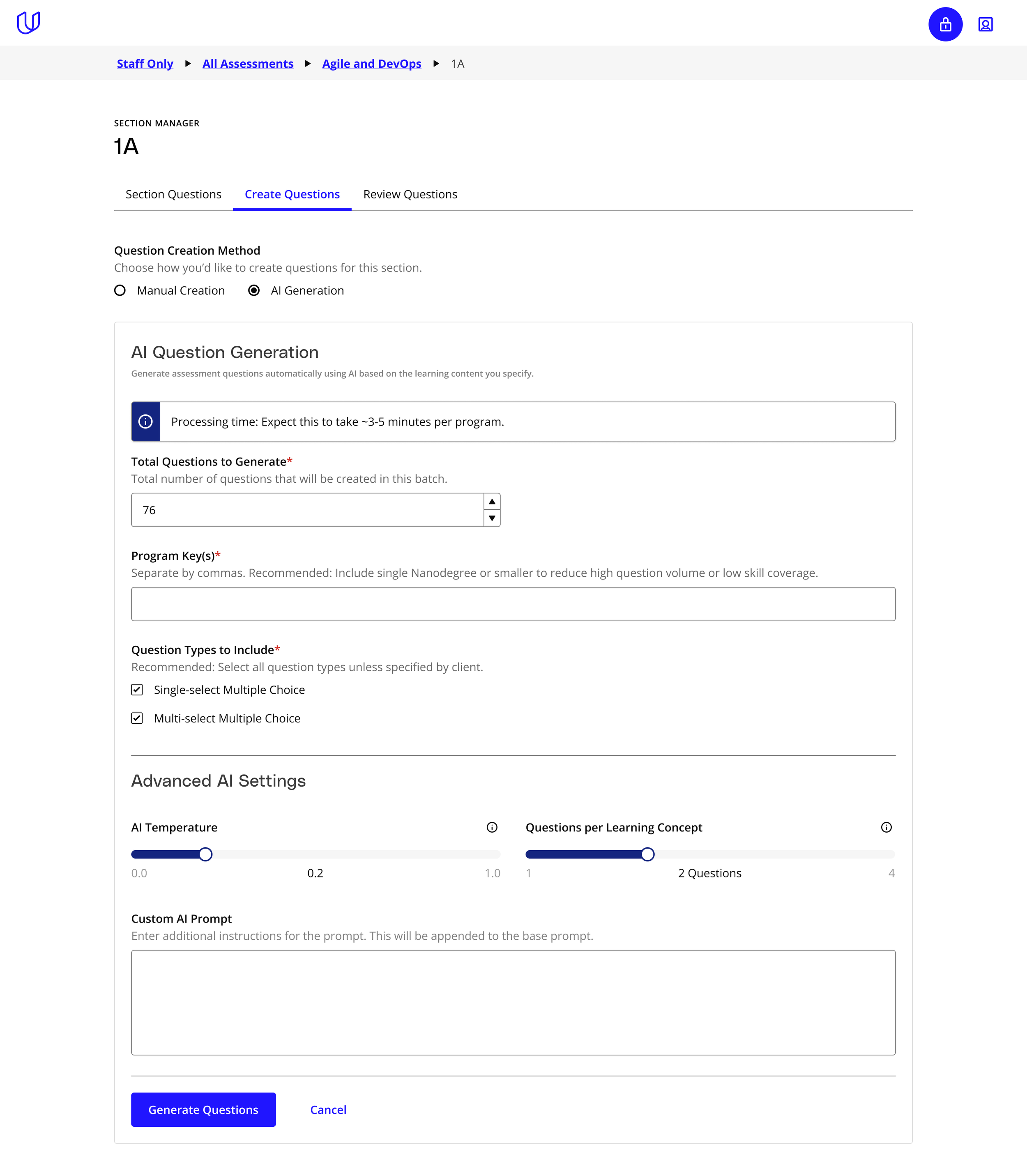
AI-Generated Question Flow
Guided AI prompt inputs
Clear distinction between AI-generated and approved content
Human review and approval before questions become active
Quality & Control
Structured review points for AI-generated questions
Ability to iterate on low-performing or low-quality content
This approach balanced speed with governance—critical for trust in AI-generated assessments.
Lovable ideation example screens
Impact
Before
Assessments manually created by engineers
No scalable workflow for updates or iteration
Limited visibility or control for non-technical teams
After
Fully functional assessment and question CRUD
AI-generated and manual workflows supported
Non-technical teams enabled to operate independently
Business Impact
Unblocked enterprise assessment contracts for Q3–Q4
Reduced operational and engineering load
Established a scalable foundation for AI-generated assessment content
Reflection
This project required making intentional tradeoffs:
Speed over visual refinement
System integrity over incremental feature delivery
Governance over unchecked AI automation
The outcome was not a polished surface feature, but a durable internal system—one designed to evolve as AI capabilities mature.
More importantly, it demonstrated how AI can be responsibly integrated into enterprise workflows when paired with strong UX and human oversight.

Introduce your brand
Take a minute to write an introduction that is short, sweet, and to the point.

Make it stand out.
It all begins with an idea. Maybe you want to launch a business. Maybe you want to turn a hobby into something more. Or maybe you have a creative project to share with the world. Whatever it is, the way you tell your story online can make all the difference.