AI-Enhanced Assessment CRUD
Experience Design to enable and accelerate AI-generated assessment creation in Udacity’s enterprise management platform
CASE STUDY
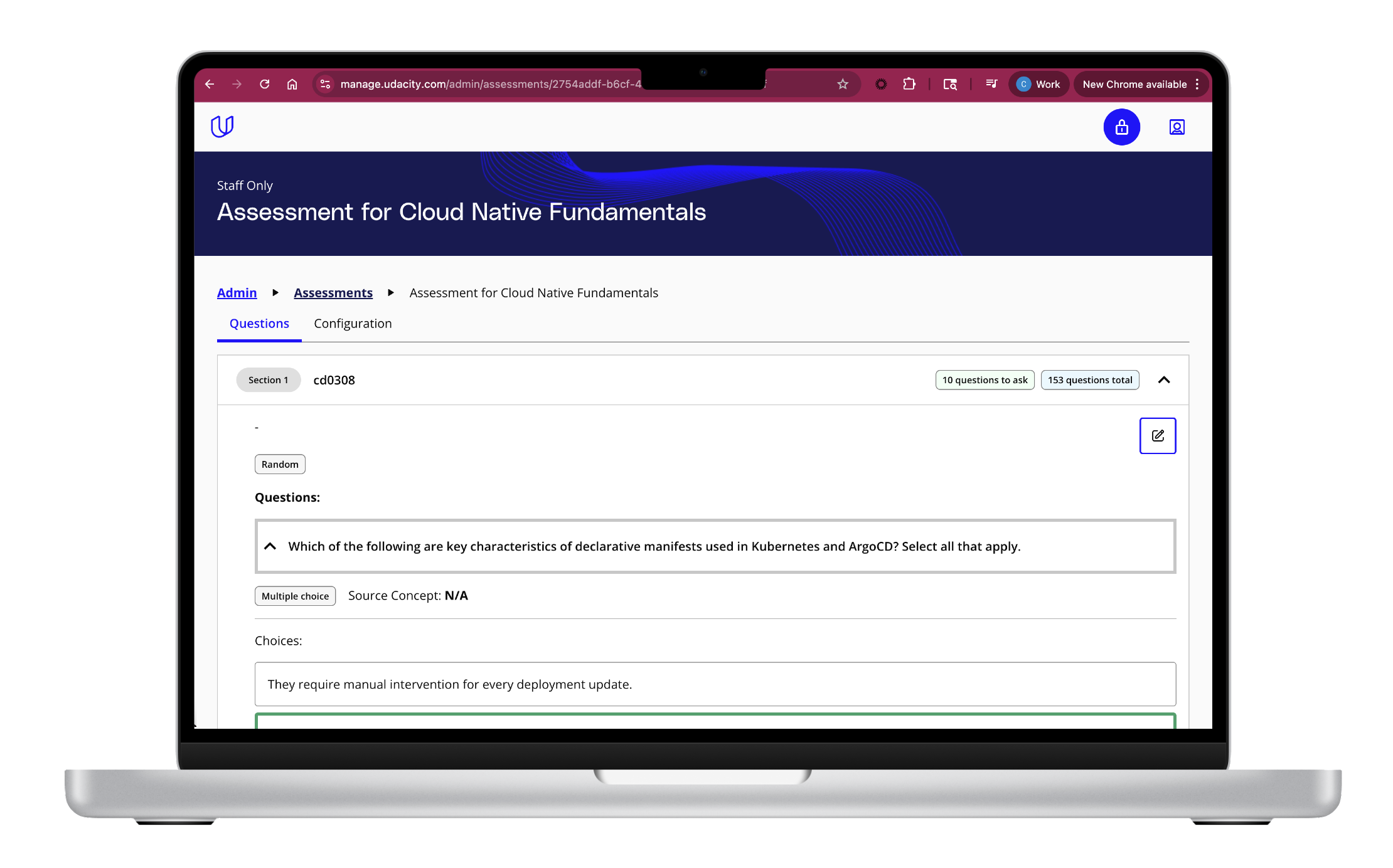
BEFORE
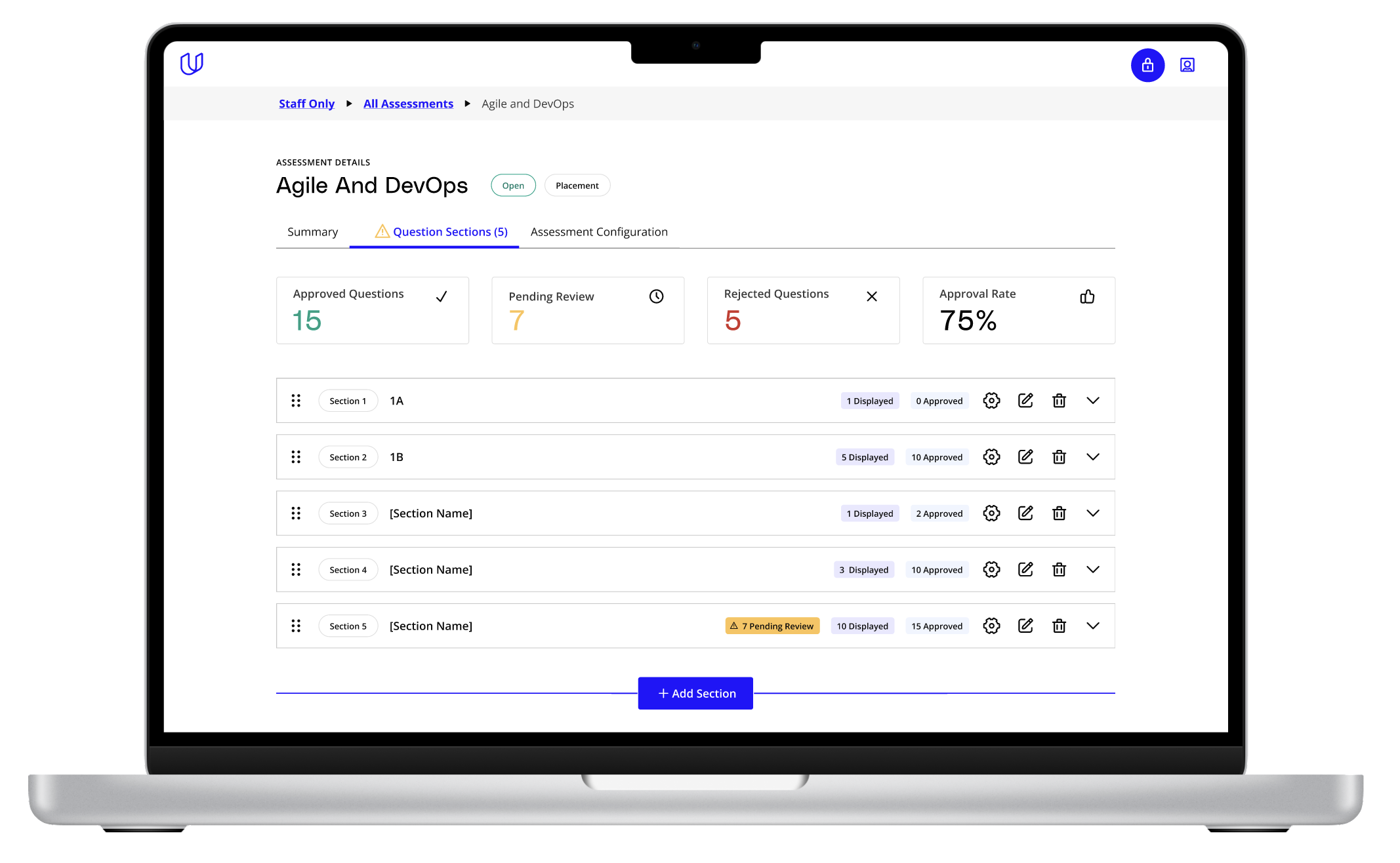
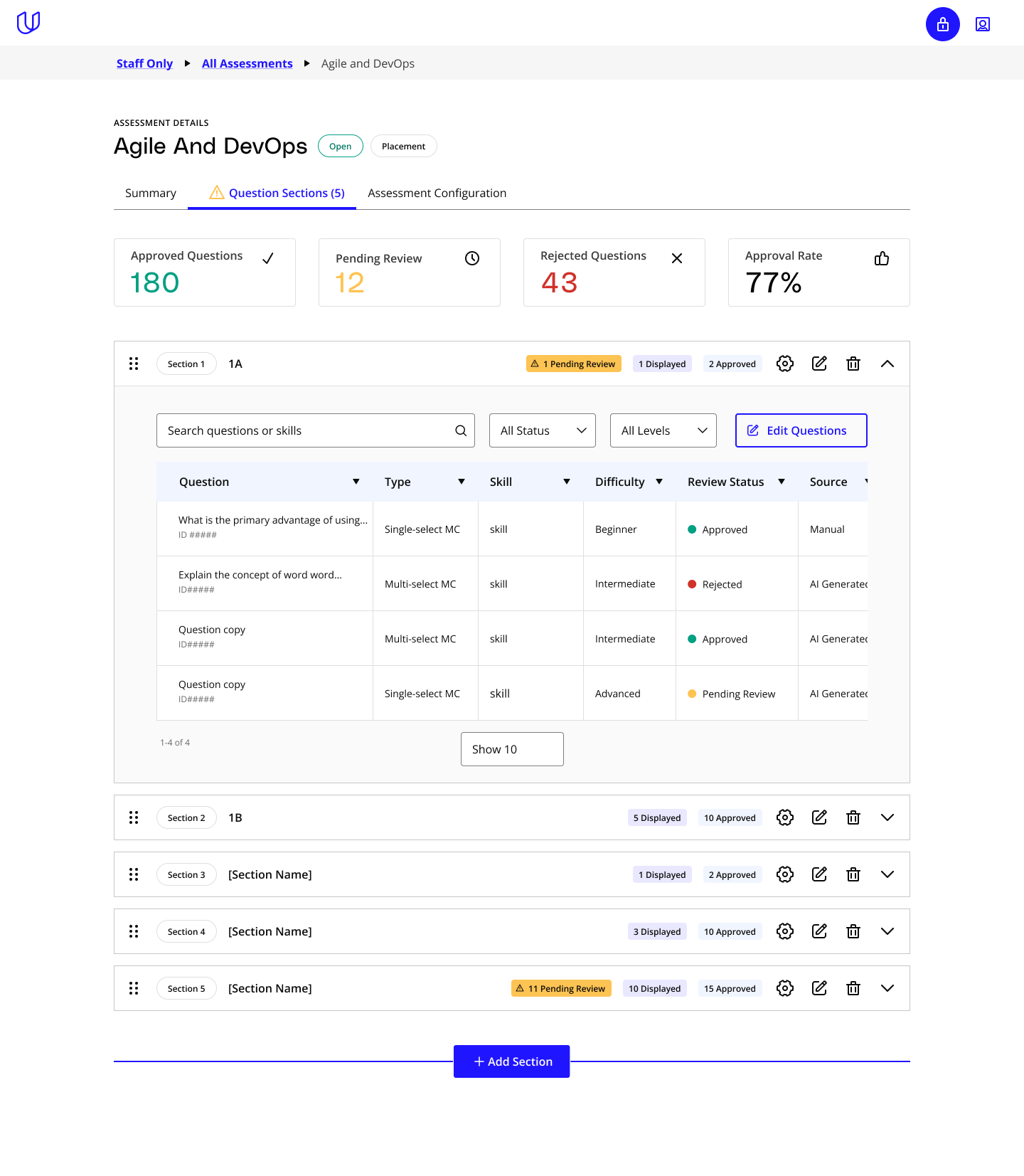
AFTER
Background
Udacity is an online learning platform that provides courses and Nanodegree programs focused on technology skills for career advancement for individuals and organizations. It offers a structured, project-based learning experience with content co-developed with industry leaders, covering fields like AI, data science, and programming. Students can learn at their own pace through short videos, quizzes, and problem sets, with the ability to receive career support like resume reviews and mentorship.
Udacity's enterprise offering provides tailored, scalable talent transformation solutions focusing on in-demand digital technologies like AI, data science, and cybersecurity. Designed for organizations of all sizes (from small teams to large corporations), these programs aim to upskill workforces, foster innovation, and drive business outcomes. Enterprise customers can utilize features such as customized learning paths, hands-on projects, assessments, mentor support, and analytics & management workflows via the Udacity Management Platform to drive learning and upskilling among their employees.
Client
Udacity Enterprise “Skills” Team
Duration
30 days
Tools
Figma, ChatGPT, Lovable, Gemini, Jira, confluence, G suite

Problems & Purpose
Problems:
Staff needed a faster and more efficient way to create and manage assessments, as the existing process was slow, manual, and not scalable.
Non-technical staff lacked the ability to independently create assessments, resulting in bottlenecks and operational delays.
There was no reliable way to measure or evaluate the quality of assessment questions, limiting confidence in the accuracy and fairness of the assessments.
As the team explored AI-generated assessment content, we needed a structured human-review process to approve or reject AI-generated questions and ensure they met quality and pedagogical standards.
Goals:
reduce reliance on engineering to configure or enable an assessment
Users & Audience
Key Users: Udacity internal staff that support enterprise customers that have purchased Workera Assessments and/or Learning Plans with assessments. Also, Udacity team members that support assessment creation and management-related tasks:
Customer Success Operations
Customer Success Managers
Content Managers

Roles & Responsibilities
My Role: Lead Product Designer: design research, AI prototype & ideation, UX/UI design
Team: “Skills” Team; 1 Product Manager, 1 Lead Engineer, 1 Backend Engineer, 1 Frontend Engineer
Stakeholders: Sales, Customer Success Ops, Customer Success, Content, Key Customers with pending renewals
All collaboration was conducted remotely.
Scope & Constraints
Timeline: 3-4 weeks (very quick turnaround)
Scope:
Enable full Assessment CRUD functionality within the existing management platform.
Integrate learnings from an engineering-built Python prototype for AI-generated questions into the production workflow.
Collaborate with engineering to understand backend limitations, including legacy platform constraints and new API/database supporting AI-generated items.
Original scope focused on introduction of an AI-driven question creation flow; however, discovery revealed that the existing assessment creation experience was incomplete. We expanded scope to build the core assessment CRUD workflow so it could serve as the foundation for both manual and AI-generated creation.
This led to necessary scope adjustments to ensure both legacy manual workflows and new AI-enabled flows were productized and scalable.
Key Use Cases:
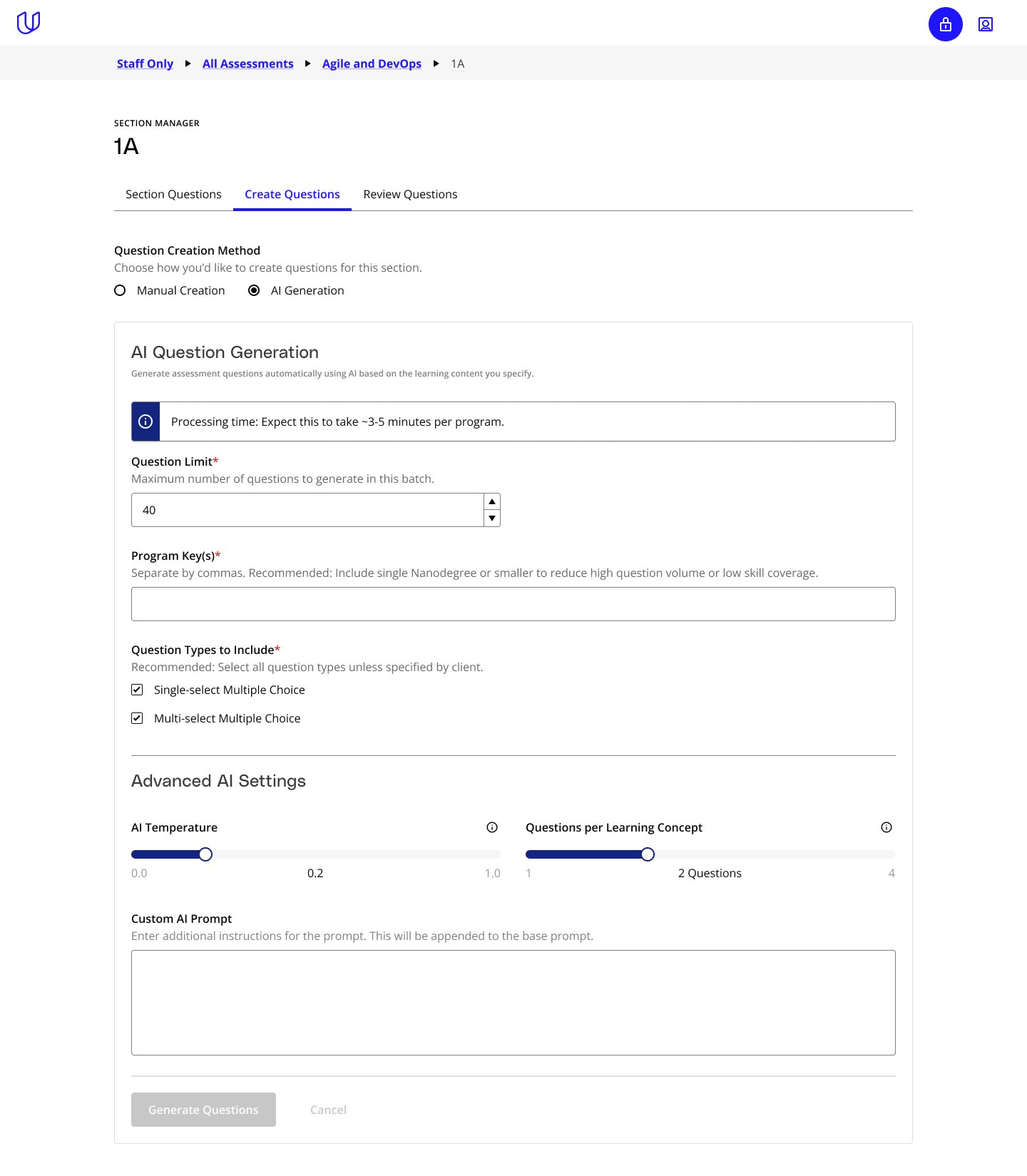
Generate assessment questions using AI.
Manually create assessments from scratch, using client-provided or internally developed content.
Replace or remove low-quality or poor performing questions.
Constraints:
Deliver a functional experience quickly to support assessment contracts scheduled for Q3 - Q4.
Minimize changes to the partially built legacy experience; for speed, we layered new functionality on top of the existing experience without major redesign.
Process
(1)
Assessments prioritized (Roadmap buster)
(2)
Design Research & Discovery Interviews
(3)
Ideation (including AI prototyping)
(4)
Stakeholder Review & Feedback
(5)
Design Iteration based on findings
(6)
Handoff to engineering & Design Review
Process
(1) Assessments prioritized (Roadmap buster)
Due to contractual obligations and work done by engineering, this inititative was added to our roadmap after the quarter had already been planned. Additionally, this was high priority and needed to be completed quickly due to contractual obligations. Thus this work was expedited and some assumptions were made and short cuts taken in my process.
(2) Design Research & Interviews
Conducted research of the current state assessment experience & stakeholder workflow, reviewed the Python prototype created by engineering, spoke with cross-team engineers to understand work completed, technical constraints, and gaps, etc, in order to fully understand the scope & constraints
(3) Design Ideation (including AI prototyping)
tbd
Lovable ideation example screens
Process
(4) Stakeholder Review & Feedback (Ops, Content, Engineering)
tbd
(5) Design Iteration based on findings
tbd
(6) Handoff & Design Review
tbd
Outcomes & Lessons
What was Delivered
tbd
What I Learned
tbd
Outcomes & Lessons
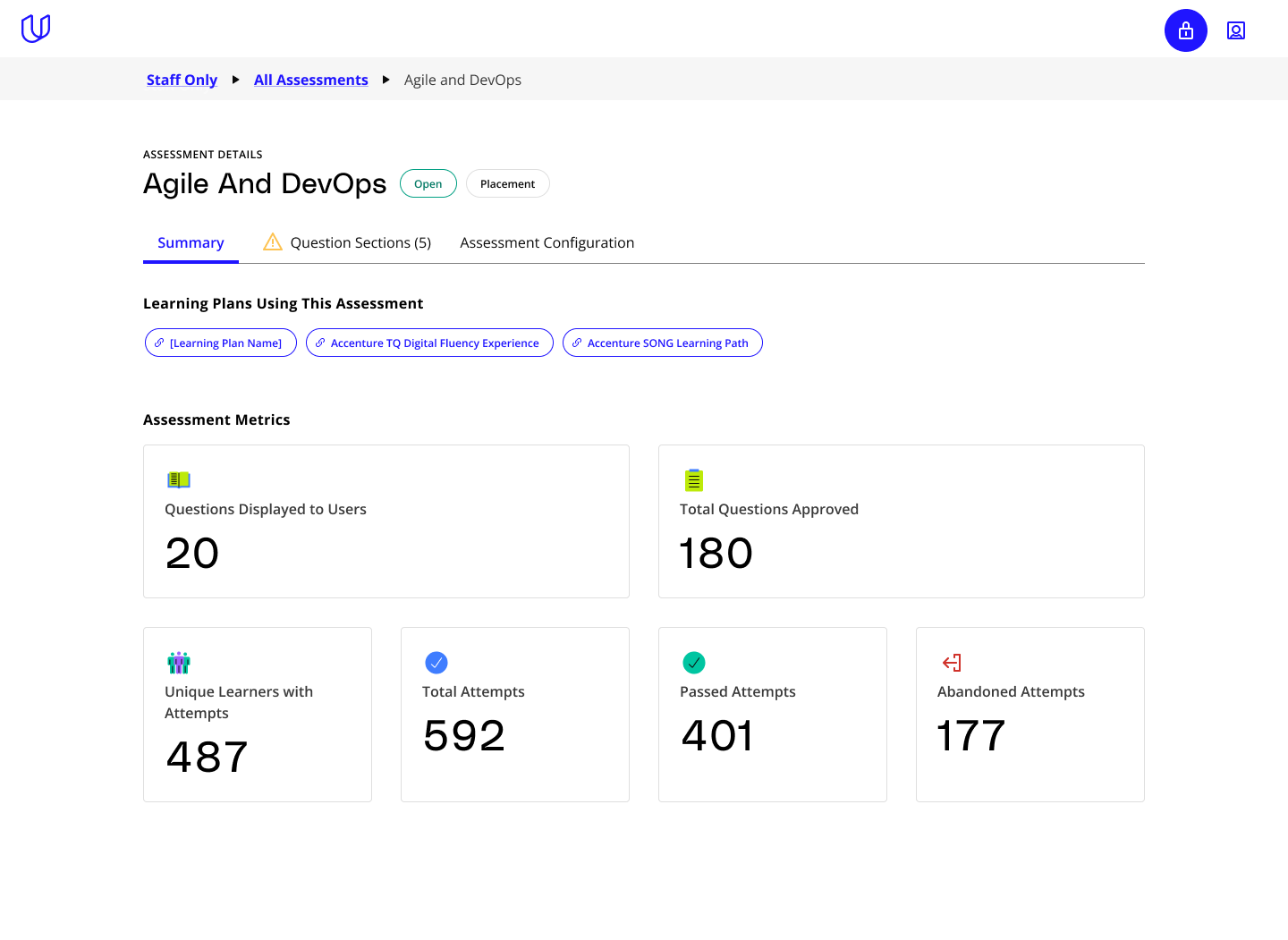
Before
View Assessments (created manually by engineers) in the management platform
View question sections within Assessments (created manually by engineers) in the management platform
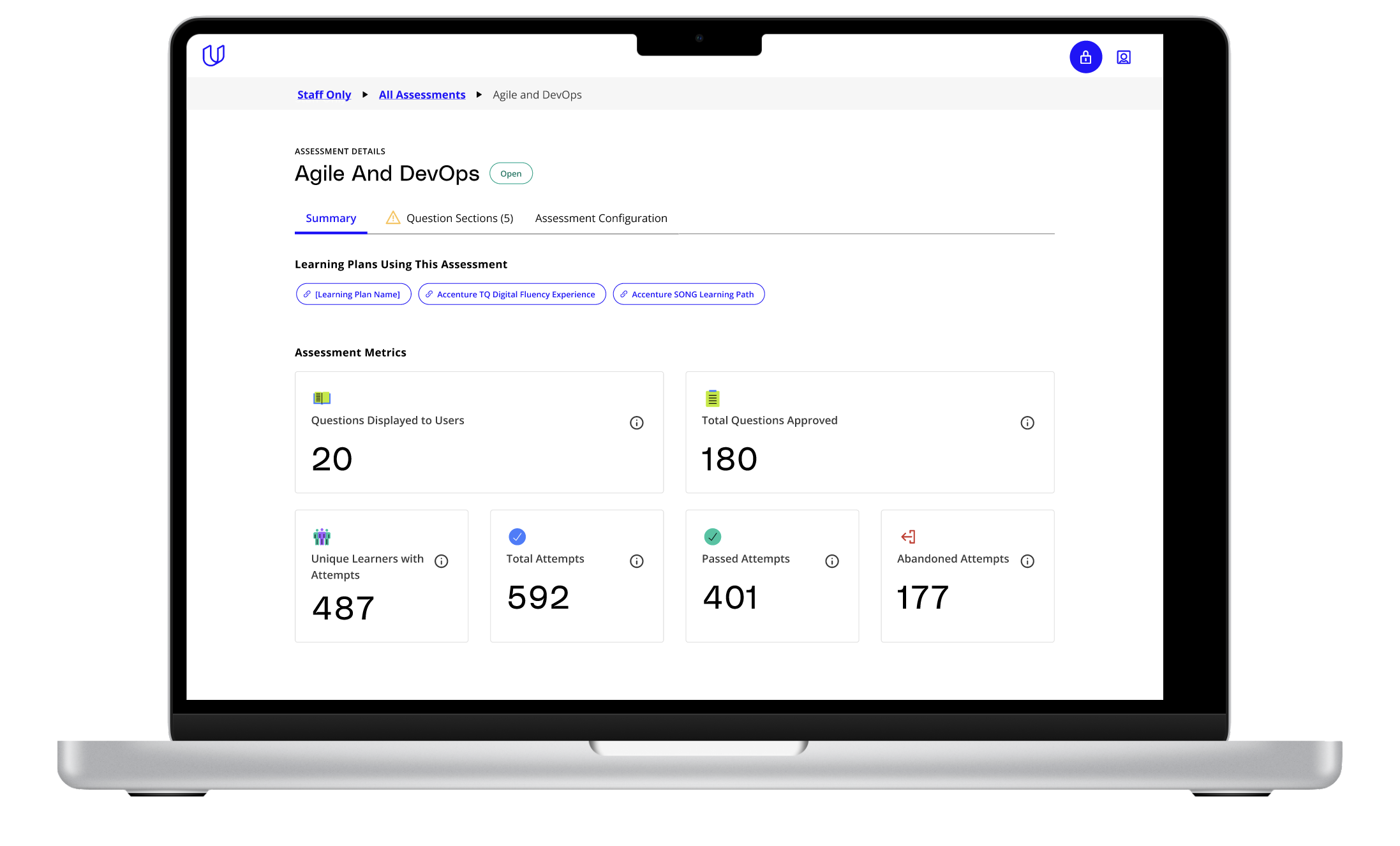
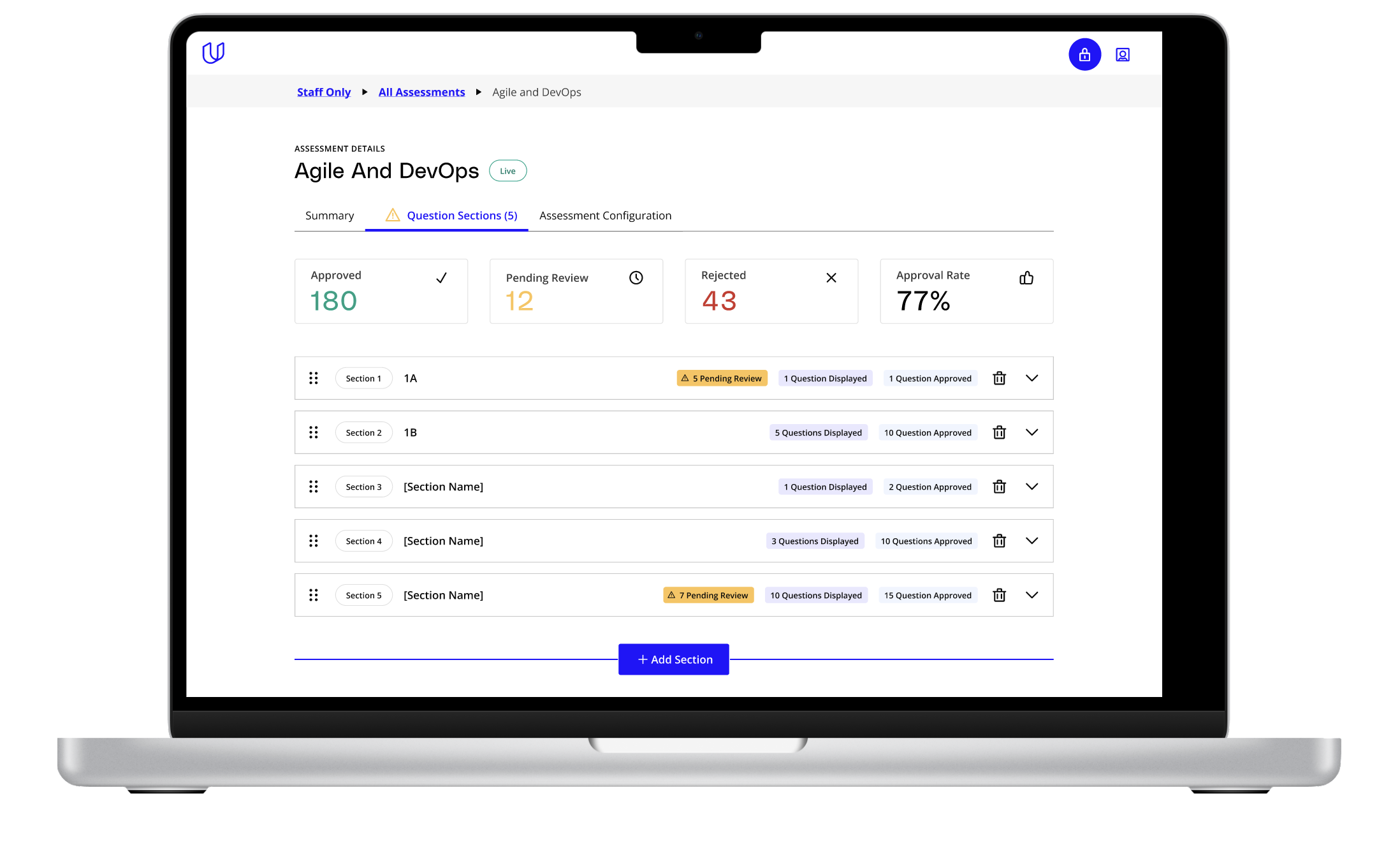
After
Fully-functional assessment CRUD (enabled for staff users)
AI-generated and manual question CRUD support


Introduce your brand
Take a minute to write an introduction that is short, sweet, and to the point.

Make it stand out.
It all begins with an idea. Maybe you want to launch a business. Maybe you want to turn a hobby into something more. Or maybe you have a creative project to share with the world. Whatever it is, the way you tell your story online can make all the difference.